Saturday, 27 November 2010

Locations

4769358518_2b1a1c572d_z.jpg (480×640)
Alleyway- Cowley, Oxford

This alleyway down Cowley down would be perfect for our opening as it creates a mysterious atmosphere, isolated with brick walls.The congested pathway adds to feeling of the character running into fear. This location really helps what we are trying to convey to the audience. We could shoot this as a point of view shot or a tracking shot if necessary.
606106.jpg (336×227)


497045006_9dd8014d8f.jpg (500×375)


Backstreet- Oxford Town, Headington

This location could be another option for us to do our opening scene as it is dark and creepy. We could place our main character in the opening scene in a backstreet like the above picture. The long lonely path could emphasis the unlikely survival of the character, running into more troubles. This is a long or could be a medium shot as a character can placed to describe the situation.

south+park+1+small.JPG (400×300)


South Park

This is a rather contrasting location to start our film. It is sunny, bright and shows nature widely (scenery). However I think it can fit in with our storyline quite well. It is realistic which has a major impact on the scene no matter what we do. We are attempting to show that this could happen in our daily live and this could make a perfect location. It can also surprise the targeted audience and get them tensed as it seems a bit strange to have bright light in a film of our genre. The camera ankle used here is low ankled as it shows power and this is quite significant in our film.

Thursday, 18 November 2010

Art of the title

Here are some of the art of the title samples that could be used in the opening title sequence of our film (Genre- Gangster/Crime).


Wednesday, 17 November 2010

Elements of Gangster Films

Iconography – 'Films and moving image products can also be identified by the key
images or icons contained within them. These images or iconic elements are usually immediately recognisable'.


how we could adapt this to our genre: in a typical gangster the central image icon would have the overcoats with turned up collars, broad brimmed hats, pistols and machine guns.

Setting – 'The use of temporal and spatial settings can therefore make a film
immediately recognisable within a particular genre or sub-genre'.


How we could adapt this to our genre: Inner suburb of the city, concrete jungle, alley ways and back streets.

Style – This is how Iconography is presented. 'This category mainly relates to use of camera, lighting, colour and both audio and visual tone'. 


How we could adapt this to our genre: Sequence of montage for violent action.

Narrative – 'Narrative refers to the different types of story structure that films of different genres employ, in addition to the narrative or storytelling devices and narrative moments which they are associated with (e.g. chase sequences, shoot outs, romantic kisses etc.)'.


How we could adapt this to our genre: Social order being challenged by gangster anarchy, struggle of leadership, rivalry between gang warfare and mobs and the hero's internal struggle as he chooses his destiny. These are the basic conflicts we could see in this genre. The hero comes as a reformed character for resolution and the social order is restored. 

Characters – 'The story of a film is most often told through characters. A film’s main protagonist or “hero” encounters a variety of obstacles which he must overcome within the story. These obstacles are usually caused by some kind of adversary or “villain”'.


How we could adapt this to our genre: Hero would be a brutal gangster who is the brutal with overambitious henchman, women would be presented as sexual ornaments, mothers in a respectable way and traditional values upheld by sisters.


Themes - 'Genre films are often underpinned by universal themes, which increase their appeal to audiences. These themes, underpinning a film’s narrative are most effective when they are based on binary oppositions'.


How we could adapt this to our genre: The ethnic gangster (usually) rises from an environment of poor working class to the high state of social prominence through the means of illegal activities and brutality, only to slide back to a rival gang through his arrest or violent death.

Audience response – 'Some genres are most easily identified by their target audience. Every film has a “mode of address”, a particular way in which it speaks to a target audience. Horror films intend to “horrify” audiences, action films deliberately set out to make an audience feel tense'.

How we could adapt this to our genre:  The main character (gangster) can be easily recognised by the audience- Highly attractive, his animal magnetism, physical and economic aggressiveness shows charisma.

The response from audience shows that gangster movies has a mythic resonance for them. A typical character we could be looking at is as of a Robin Hood figure who helps and protects the poor and the weak against the rich and powerful.

Analysis of Good Fellas

The transition between the titles has a moving pattern. This shows rush. Simply from one title to another, it moves and has a background sound of cars passing through. This gives the idea of an urban place and rush traffic. Ironically the film starts with a car driven on the road. The idea of mentioning that ‘this film is based on a true story’ at the beginning gives it a more realistic effect.


The scene starts with a low ankle camera shot of the car and then as the car moves the shot goes into a tracking shot to keep up with the action. The screen goes blank again and shows the location and the period of time.


The next scene introduces us to three characters that are in the car, rather in a relaxed mood. When everything is calm a noise suddenly kicks in making the characters worried. This makes the audience a bit suspicious as the worse is much expected. But of them suggests that it might be that the car suffered a flat tyre which diverts the thoughts of the audience to make it look like a minor problem. The camera shot works are quite intense as it creates tension and anxiety- close ups and two shots are used. The camera zooms into the car closely as they are about to open the car dickey. Zoom is used to increase the anxiety of the audience and make it more intense. Then it zooms into the characters to see their reaction which would have an impact on the audience. When one of them opens it, we see a man covered in blood trying to escape. As soon as we see it one of the character pulls out a knife and stabs him continuously saying ‘he hasn’t died yet’ which emphasis that it had been pre- planned and that they are responsible for wounding him. To make it even crueller, another one pulls out a gun and shoots him and ensures he is dead. We see some of the typical elements which would be seen in a gangster film such as knife, gun, dark scenery, suit etc.


Goodfella's-Opening

Sunday, 7 November 2010

Inspired Movies

We make a group of four people who are about to make a film. We had many ideas about how our film should look like and what could be the elements we should include for the film to have its appropriate theme, the rate of conventions, understandable for the audience and identify the message we are trying to forward.

Firstly we looked at all the genres we could apply to the film. Then we looked at the characters, locations and sound we could chip in on the basis of the storyline. 

Considering the limitations of technical support and locations we had to cope with, we decided on the final draft of our film. It is going to be a gangster/crime movie in which we could manage all the necessary elements inside our limitations.

Now here are some of the movies we inspired from:


Scarface Trailer

The Godfather: Trailer

List of Gangster films


In modern movies, gangster genre is one of the most popular and we could see some of the incredible gangster movies which are made by the best film directors. I have a choice of my own gangster movies in terms of  the theme, the rate of convention, sound effects and so on.


The film which would make it first on my list would be Godfather
img_3395_godfather.jpg (1024×768)


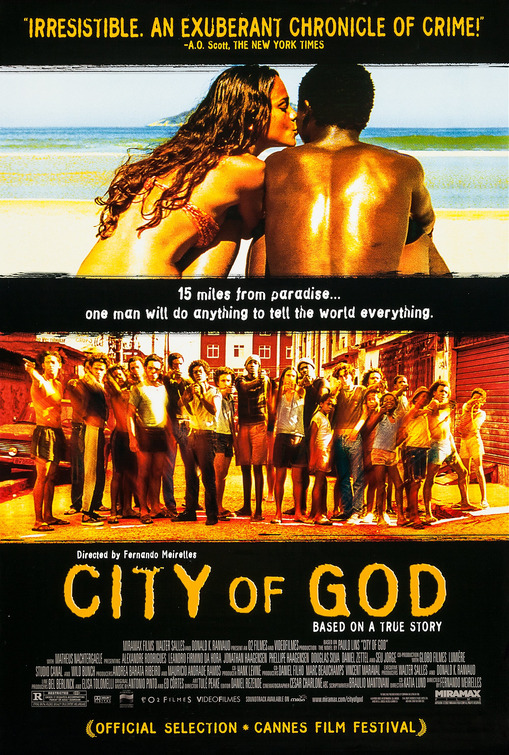
The other films which would make a place in my list is Scarface, City of God, The Departed and the Good Fellas.

scarface.jpg (512×384)
city_of_god.jpg (513×755)
the-departed.jpg (300×429)

goodfellas.jpg (342×475)

Tuesday, 12 October 2010

Blade & Night of the demons

In the movie Blade, there are different variety of features which includes the camera shots, the sound and the signs and signifier. in the opening scene, we can sense the rush as it has fast music and it is shot in a way that looks like it is been forwarded. we could see the shadows falling in which clearly shows the dominance of darkness in the film. the camera shot which are used in the shot are mainly high ankled shot. This is to show what has been happening around and also could use to show the location. The frequency of the music is like a roller-coaster as it goes up and down constantly. Younger characters in here is significant as it emphasis the carelessness and the car is rashly driven. This also gives a sense of danger and keeps the audience anxious. The camera shot here is tracking. The scenes get more unpleasant along the way as the next scene is in a meat chopping factory and the characters shown seem to be arrogant. this is not pleasant for the audience as it creates a tensed atmosphere. But suddenly vibrant music comes along and its all in a party mood. Although, we get a feeling of something coming in the way. This is supported by the camera shots as it constantly moves from one to another searching for action. The camera shot used here are point of view shots and panning shots.

Night of the demons takes us through a time in the 1900s with classical music. The black and white picture suggests that what is happening is old. However the sudden change in the mood get the audience jump out of their seats. There are some editing to make it more effective. The scene takes close up shots of demons which really slams the audiences' mind. The mood keeps changing so does the music. This is to give the audience a glimpse of what to expect. The root of the story comes from the 1920s which sets the base of the story where a woman commit suicide. The camera shot used in here are mainly tracking and close ups. The next scene is shot is shot in the modern world so it uses appropriate editing. The sound is vibrant as it is a Halloween party scene. The camera shot used is panning. This is suspicious because why Halloween? Adding to that are the flexes showing 'the end is near' gets the audience worried and anxious. The music is fast so as the camera movement which symbolises that something is coming and you get the feel of a rush. The environment is quite dark and the characters are spooky wearing only dark colours.

Friday, 1 October 2010

Sherko etc

Preliminary Task

 How did you approach the filming process?


I was put in group of four people where we worked as team, producing different ideas about what the storyline could be. Everyone had their own view of presenting the film but eventually we were down to the best one out of our selection. We were provided with a storyboard and a camera to shoot with which was helpful as it had all the necessary elements we needed on making a film. Now that every components are there, it all came down the location- as a group we had a plan of starting the film with a establishing shot so we concluded on taking an outdoor shot to start with. We tried many shots with and without the tripod, saved it and chose the best shot we thought when it came to editing. We had to arrange ourselves for the different roles we had to play in the process of the film to make it an achievement. I had to adapt myself into the character as I was responsible for making the audience impress by our acting along with one of my mate Jack. While the rest of the people in our group (Sherko and Mushy) had to make sure all the scenes were watchable with trying different location and different camera ankles. We knew in order to put this together and give it a soothing effect, support from a sophisticated machinery which would then allow us to have a certain mind of the things we could do to make it look like a film was needed. Thankfully we were provided with a Mac book which really helped us a lot both in case of video and audio editing.


 How satisfied were you with the filming?


The filming was fun as we all had a chance to chip in our own opinion about the ankle of the camera placed, the location and the shot itself- if that shot was necessary to be shown in the film? It was a chance for us to explore our knowledge in the camera shots which we learned in the past few lessons. However I wouldn't be able to say that I'm fully satisfied with the way we did our task. There are many areas where we could've improved including the possibilities of more technical support. For example, help of a trolley could make the tracking shot more steady and with the help of more advanced lighting sources could make the shot more clearer and visible to the audience. Although I am not too much worried about the lack of skills as it was our first attempt to prove ourselves in making a film. 


How well did your team work together? How could you be better organised next time


Although the time we spent on the filming was very short, we had long periods of planning and discussion between us about the film. It was fun working as group as it would then enable you to extend and develop your own ideas from the suggestions and views of other people in the group. The first thing I would make sure when doing filming is to keep the basics right. This means steadying the camera when shooting with using a tripod, not letting any kind of light source behind the character when filming and the dialogue delivering must be clear- this could be done by using a mike may be. Also I would try hard to limit my time on planning, thinking about the locations and the type of camera shots. But trying a certain shot on different ankles would do no harm even though you know the best ankle to place it. The film itself would be the other factor I would take care about because doing a film which is sensible and appealing to the audience would be better than experimenting new things and identifying your ideas along the process, making no sense at all.


 What particular challenges or problems occurred?

The taking of the film was the biggest challenge as we had limited range of experience. Although, we took the task as an opportunity to invent our abilities in the different prospectives of filming. The other important concern was the impact it would make on the audience. We had to step up the standard of our video with necessary video and audio editing to make it more appealing to the audience. There weren't any particular problems that we had to face apart from the fact that we had to go around school finding appropriate locations to shoot our video. Although, we would wish to have an advanced technical support on the shooting of the film.

What have you learnt about filming from completing this task?

Firstly I have realised how much time should be put in the process. It can be long and you need patience to come out with a film of your wish. All the other secondary things which goes from using a camera to mixing the sounds and editing has its own difficulties in the making. A lot of effort has to be gone in for a worthy outcome.

Thursday, 16 September 2010

AS Coursework

Extreme wide shot (Establishing shot)
 The view is so far from the subject that it isn't even visible. Often used at the start of filming, tells you the location and time.


Long shot
Introduce the character with elements and features. The character should be taking full frame with the background still comfortably seen.


Mid shot
Shot above waist height of the character which allows to show his/her facial expressions and a chance to get to know him.


Close up
Engages the audience mainly to the character as a certain feature or part of the character takes up the whole frame.


Extreme close up
It gets in extreme detail and the emotions of the character is quite intense. Also creates intensity in audience.


Two shot
It is a shot taken where two subjects are framed. The subjects don't have to be close to each other. There are common two shots taken with one character(subject) in the foreground and one in the background.


Point of view shot
It is shot from the view of one character to the other character who is shown in the screen.


Match on action
It is when an action is briefed in two shots.


                               More advanced shots

Tracking shot
It is when the camera is put on a trolley. We often do the tracking shot sideways to keep track with the character.


Tilt shot
It is shot vertically to show the full figure of the character.


Zoom
It is used as an alternative for the tracking shot.

Crane shot
It is the shot taken with the help of a crane. It is often shot overhead to show the view from the top.


Arc shot
This shot when taken goes in a semi- circle or a circle around the character. Often creates intensity.


Panning shot
It is when a camera is placed in a tripod and move steadily in the track of the character.


The 180 degree rule
It is the basic rule that states two characters in the same scene should always have the same left/right positions to each other throughout the scene. There is an imaginary line that divides the sides and if the camera passes over it which connects the two subjects, it is called crossing the line. The new shot, from the opposite side, is known as a reverse angle.


Things you may want to care about when filming:


  • Try to have your camera at eye-level
  • Steady the camera while performing the moving shot
  • Careful with the zooming
  • Make sure you leave the time for transaction
  • Make sure there is no lighting source behind the character.